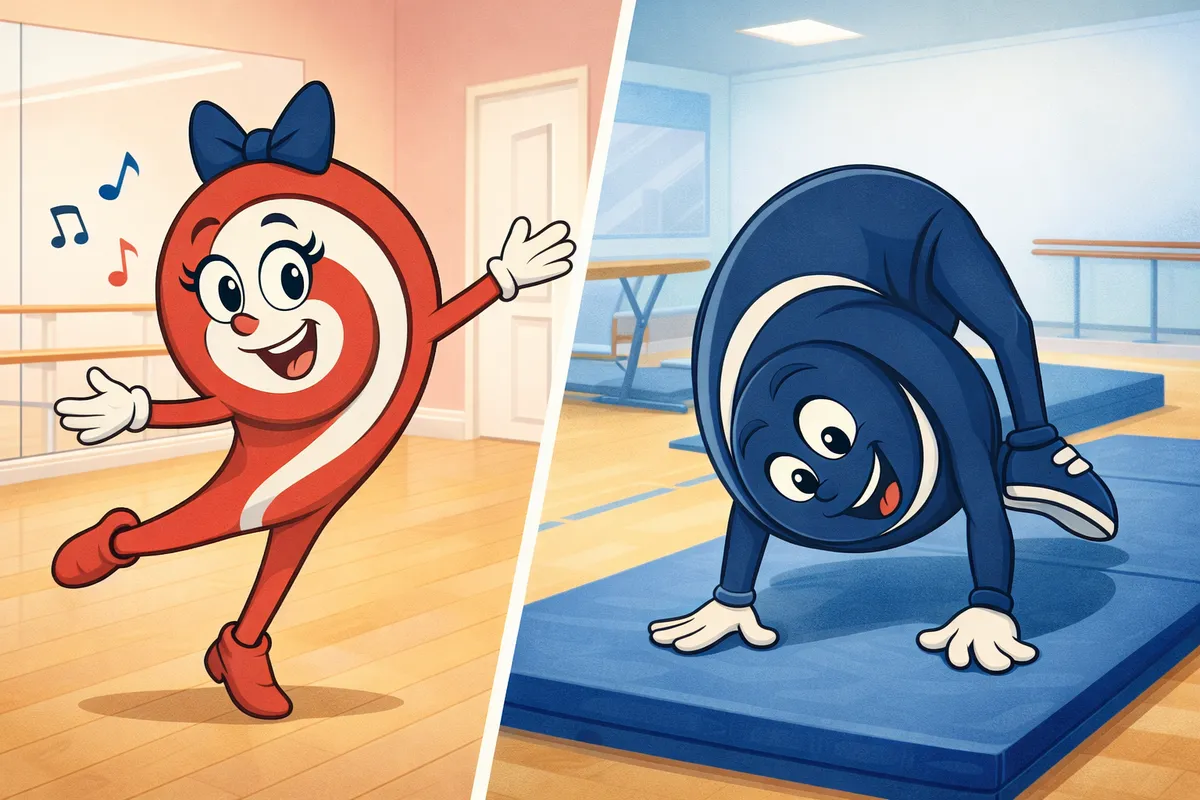
One child turns on music and dances through the living room. Another is determined to learn a cartwheel. Many love both. If you are choosing an extracurricular activity, dance and tumbling can each be rewarding—but they emphasize different ways of moving.
Here is a practical comparison to help families decide where to start without assuming that every child needs the same type of class.
What Children Practice in Dance
Dance combines movement with rhythm, musicality and expression. Depending on the style and class level, children may learn how to hear a beat, move through a sequence, practice positions, or explore turns, leaps and traveling steps. They also get opportunities to interpret music and express ideas through movement.
At Alpha Omega, the dance program describes options ranging from preschool creative movement to styles such as ballet, jazz, tap and hip hop. Individual offerings can change, so families should review current class listings before choosing a style.
What Children Practice in Tumbling
Tumbling focuses more directly on floor-based athletic skills. Beginners develop foundational shapes and control while more experienced students may work toward cartwheels, round-offs, walkovers and other skills as appropriate. Progress is not just about mastering a trick; technique, strength, readiness and consistency matter.
Alpha Omega's tumbling program serves children ages 6 and up and offers skill-level progression. Higher-level placement requires coach evaluation. Parents should avoid teaching back handsprings or aerial skills at home and leave technical progression to qualified coaches.
A Quick Comparison for Parents
| Your child is most excited about... | A program to explore |
|---|---|
| Music, choreography, performing and creative expression | Dance |
| Cartwheels, floor skills and technical tumbling progressions | Tumbling |
| Both rhythm and athletic floor movement | Ask the coach which option to begin with, or how interests might complement each other |
These are starting clues, not labels. Some dancers also enjoy tumbling, and some tumblers enjoy dance. Families do not have to pick a lifelong identity with the first class.
What About Dancers Who Want Better Tumbling?
A dancer may become curious about cartwheels or other floor skills; a tumbler may want to explore rhythm and choreography. Learning a new discipline can be enjoyable, but the two types of classes are not interchangeable. Dance training emphasizes technique appropriate to its style, while tumbling training focuses on progressively more demanding floor skills. Ask your child's coach about experience level and appropriate placement before switching or adding activities.
Four Questions That Make the Choice Easier
- What does your child practice for fun? Music and movement, or floor skills and new physical challenges?
- What is the starting class? Check age expectations and whether a coach evaluation is required.
- What happens during a typical lesson? Ask about instruction style, basic skills and how students move forward.
- What is realistically workable? Choose a location, time and routine your family can maintain; confirm current schedules directly.
Dance and Tumbling Around Kingwood and Fresno, Texas
Alpha Omega lists dance at its Kingwood location and tumbling at both Kingwood and Fresno. The Fresno gym also serves former Pearland families following the October 2026 move. Do not assume a specific dance style or tumbling level has openings; ask the location about current classes and suitable placement.
Ready to explore? Compare Alpha Omega Dance and Alpha Omega Tumbling, or visit the main website to choose Fresno or Kingwood and contact the team.